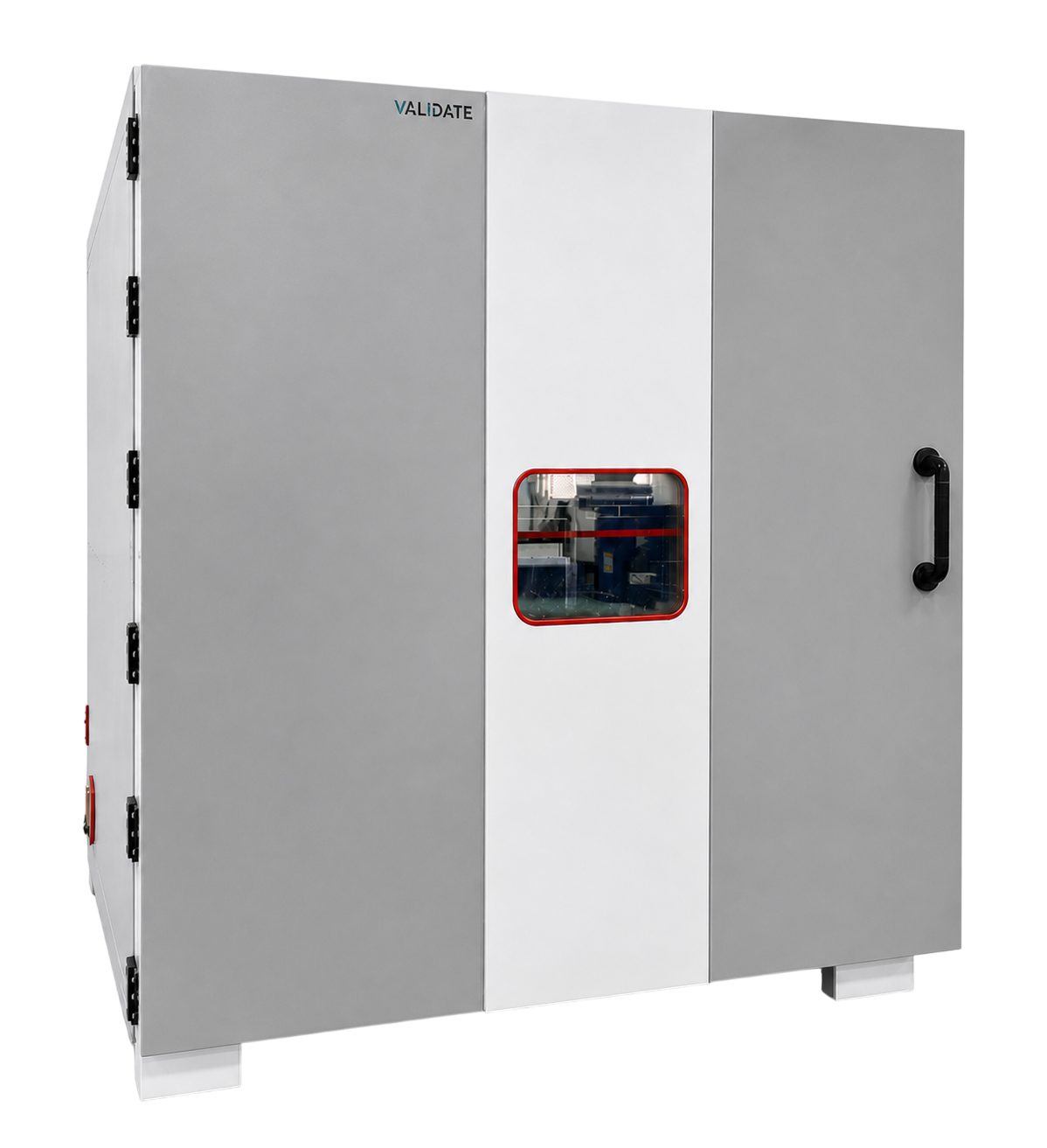
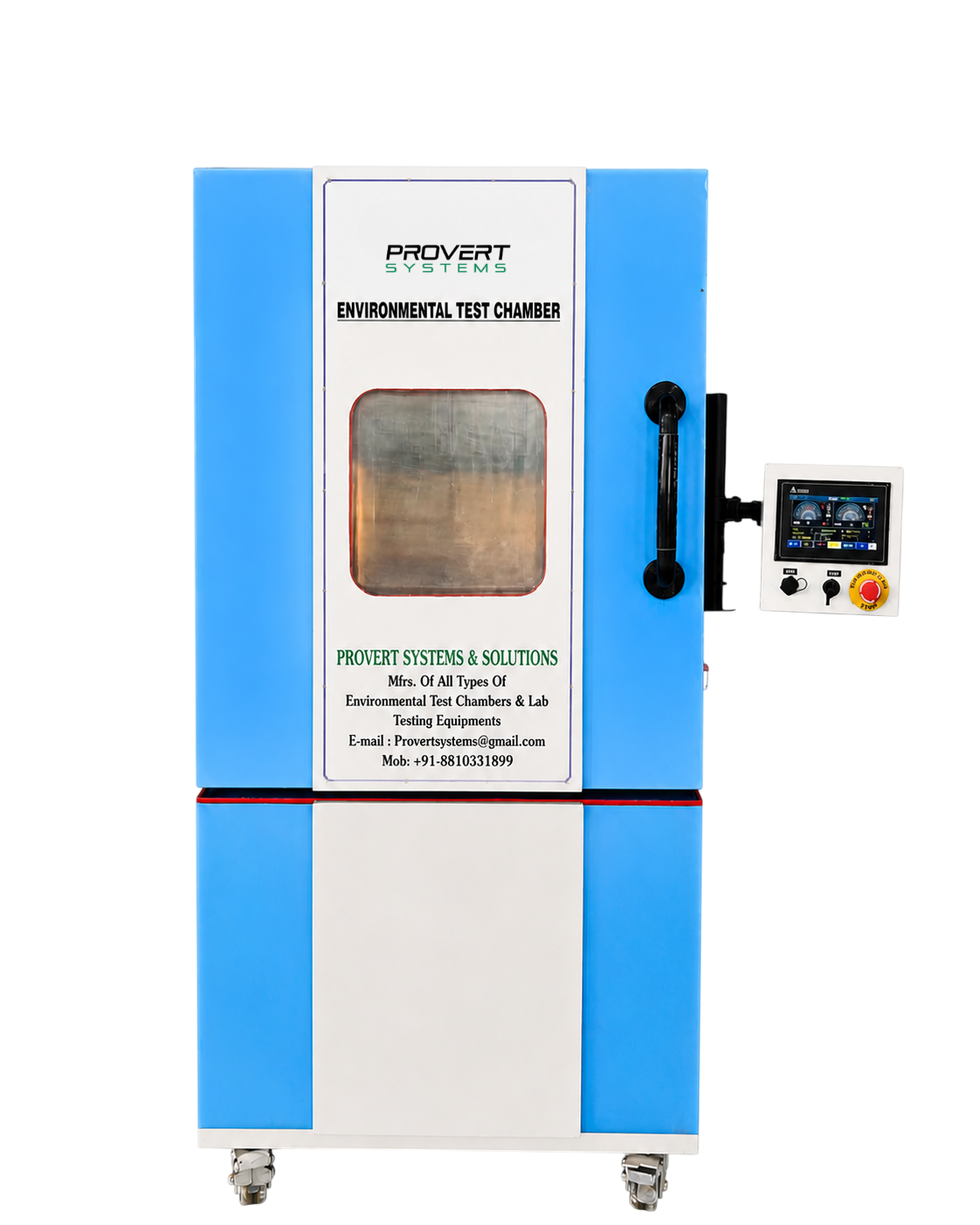
Our Walk-In Test Chambers are engineered for high-capacity environmental testing, enabling precise simulation of temperature and humidity conditions for large products or bulk testing. These chambers replicate real-world environmental stresses such as heat, cold, and humidity to evaluate product durability, performance, and lifespan.
Ideal for R&D, quality control, and compliance testing, the system provides stable and uniform environmental conditions across the entire chamber. With advanced PLC-based automation and robust construction, it ensures consistent and repeatable test results even under long-duration testing cycles.
Key Highlights
- Temperature Range: -30°C to +80°C
- Humidity Range: 20% to 95% RH
- Capacity: 6000L to 18000L (Custom Sizes Available)
- Control System: PLC + HMI Automation
- Uniformity: ±1°C / ±3% RH
- Industrial-grade construction
Key Features
- Large capacity chambers for bulk and full-product testing
- Accurate temperature and humidity control
- Uniform airflow distribution across entire chamber
- PLC + HMI based automation system
- Programmable test cycles and profiles
- Energy-efficient insulated design
- Heavy-duty industrial construction
- Real-time monitoring and control
Smart Control & Monitoring
- PLC-based automation with touch interface
- Remote monitoring via mobile & laptop
- Data logging and test history tracking
- Alarm system with event logging
- Multi-program test cycles with repeat options
- Real-time graphical data visualization
- User activity tracking and reporting
- Screenshot and report export features
Robust Industrial Construction
- Inner Chamber: SS304 stainless steel (corrosion resistant)
- Outer Body: Powder-coated mild steel
- Insulation: High-density glass wool (75mm thick)
- Air Circulation: Fan-forced uniform airflow system
- Cooling System: High-performance compressor (CFC-free)
- Heating System: High-quality nichrome heating elements
- Humidity System: Steam-based humidity generation
- Mobility: Heavy-duty castor wheels
Applications
- Electronics and telecommunications equipment testing
- Pharmaceutical product stability testing
- Automotive and industrial component testing
- Solar panel and outdoor equipment testing
- Product lifecycle and durability analysis
- Environmental simulation for R&D
- Accelerated aging and conditioning
Customized for Your Testing Environment
Every testing requirement is unique. Our Walk-In Chambers are fully customizable to match your product size, testing conditions, and operational requirements.
- Custom chamber sizes and layouts
- Adjustable racks, trays, and configurations
- Custom temperature and humidity ranges
- Advanced automation and control integration
- Industry-specific testing setups
Why Choose Walk-In Test Chamber
- Designed for large-scale product and batch testing
- Precise control of temperature and humidity conditions
- Uniform airflow ensures consistent testing results
- Advanced PLC automation with programmable cycles
- Robust construction for long-term industrial use
- Energy-efficient insulated chamber design
- Supports accelerated aging and lifecycle testing
- Fully customizable in size and configuration

 FAQS
FAQS
